
Starting a private practice is a journey often fuelled by passion, clinical expertise, and a desire to help people. Most physiotherapists, osteopaths, and chiropractors in the UK begin their business journey because they are excellent clinicians, yet they quickly find that being a great therapist is very different from being a great CEO.
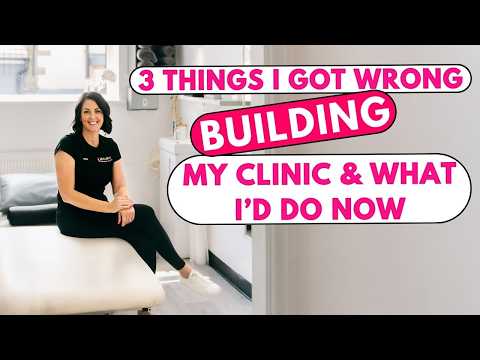
In a recent episode of the Treat Your Business podcast, Katie Bell was joined by Fiona, a strategic coach at Thrive with over 25 years of experience in clinic ownership. Together, they reflected on a combined 37 years of business experience to discuss what they would do differently if they were starting a brand new clinic today.
If you feel like you have hit a ceiling in your growth, or if you are feeling the weight of the daily grind, these lessons on clinic leadership, habits, and systems will help you find the clarity you need to move forward.
The Reality of Clinic Leadership: Moving from Clinician to CEO
One of the most significant realisations for any clinic owner is that the business can only grow as much as the leader does. Many owners inadvertently become their own biggest bottleneck. When you are tied to the treatment room for 40 hours a week, you have very little mental capacity to focus on the strategic direction of the practice.
Leadership is not just about managing a team; it is about managing yourself. It requires a shift in mindset from being the person who does the work to being the person who ensures the work gets done to a high standard. This transition is often where clinic owners struggle the most, as it requires letting go of control and trusting in others and in your systems.
Lesson 1: Your Mindset is the Ultimate Bottleneck
As a clinic owner, your state of mind dictates the health of your business. Katie and Fiona discussed how often owners make decisions from a place of stress, scarcity, or overwhelm. When you are in a stress response, your brain cannot access the prefrontal cortex, which is the area responsible for logic, creativity, and long-term planning.
If you find yourself making reactive decisions, such as hiring the first person who applies because you are desperate or slashing prices because you had a quiet week, you are likely operating in survival mode. To lead a successful clinic, you must prioritise your own mental clarity. This might mean taking regular time away from the clinic, investing in coaching, or simply creating a morning routine that allows you to start the day with intention rather than reacting to emails and messages.
Lesson 2: Build the System Before You Need It
If something happens more than once in your clinic, it needs a process. One of the biggest regrets many experienced clinic owners have is not introducing rhythm and systems earlier in their journey.
Systems are not there to make your business rigid; they are there to make it repeatable and consistent. Without them, the quality of care and service depends entirely on who is working that day. This creates an inconsistent experience for your patients and a chaotic environment for your staff.
Think about your patient journey from the moment they find your website to the moment they are discharged. Is there a system for how they are greeted? Is there a process for how follow-up appointments are booked? Is there a standard for how clinical notes are recorded?
By documenting these processes, you create a business that can run without you. This is the difference between owning a job and owning a business. Start small: identify the top five tasks that happen every day and write down the step by step instructions for them. This simple act can save you dozens of hours over the course of a year.
Lesson 3: The High Cost of Tolerating Mediocrity
One of the most expensive mistakes you can make is hiring the wrong person. However, even more expensive is keeping the wrong person in your team for too long. Katie and Fiona emphasised the importance of hiring "A-players" early on.
An A-player is someone who not only has the clinical skills required but also aligns with your clinic's values and has the drive to help the business grow. Too often, clinic owners tolerate "B" or "C" players because they are afraid of the recruitment process or they fear being short-staffed.
Tolerating sub-standard performance has a ripple effect. It demotivates your high performers, lowers the standard of patient care, and takes up an enormous amount of your emotional energy as a leader. If you were starting again, the advice is clear: hire slowly, fire quickly, and never settle for anything less than excellence in your team.
Why the Basics Trump New Marketing Every Time
It is tempting to always look for the next big marketing trend to bring in more leads. However, before you spend more money on Facebook ads or SEO, you must ensure you are getting brilliant at the basics.
Patient retention and lifetime value are the two most important metrics for sustainable growth. If you are losing patients after their second or third visit, your clinic is like a leaky bucket. You can pour as many new leads in the top as you like, but you will never truly grow.
Focus on the following basics:
- Communication: Are your therapists clearly explaining the treatment plan and why the patient needs to return?
- Follow-up: Do you have a system for contacting patients who have dropped off the diary?
- Patient Experience: Does every patient feel valued and cared for from the moment they walk through the door?
- Outcomes: Are you consistently delivering the results your patients expect?
A small 5% to 10% improvement in your patient retention rates can add tens of thousands of pounds to your annual turnover without you having to find a single new patient.
Defining Success on Your Own Terms
Finally, it is essential to decide what growth actually means for you. In the world of business coaching, there is often a lot of talk about scaling to multiple locations or hitting seven-figure turnovers. While these are valid goals, they are not the only version of success.
Growth might mean having more time to spend with your family. It might mean reducing your clinical hours from 40 to 10 so you can focus on mentoring your staff. It might mean having a highly profitable single-site clinic that runs like clockwork while you are on holiday.
Before you embark on your next stage of growth, ask yourself what you want your life to look like in three to five years. Build your business to support that life, rather than letting the business dictate how you spend your time.
Conclusion: How Long Are You Prepared to Wait?
If you find yourself stuck in a cycle of trying new things but seeing very little change, it is time to pause and reflect. The lessons shared by Katie and Fiona are a reminder that the path to a successful clinic is paved with good habits, strong leadership, and robust systems.
You do not have to figure it all out by yourself. Just as you would advise a patient to seek professional help for an injury, you should seek professional support for your business. Whether that is through a mentor, a coach, or a peer support group, getting the right advice can shave years off your learning curve.
How long are you prepared to wait for the business you dreamed of when you first opened your doors? The best time to start implementing these changes was when you first started; the second best time is today.
To hear the full conversation and dive deeper into the practical steps for clinic growth, listen to the full episode of the Treat Your Business podcast.
[Listen to S2 EP09 3 Things I Got Wrong Building My Clinic (And What I’d Do Now) here]